
Comprehensive Type 1 & Type 2 Diabetes Care
Comprehensive evidence-based diabetes care utilizing SGLT2 inhibitors, GLP-1 receptor agonists (Semaglutide / Tirzepatide), continuous glucose monitoring (CGM), and intensive insulin regimens to prevent microvascular and macrovascular complications.
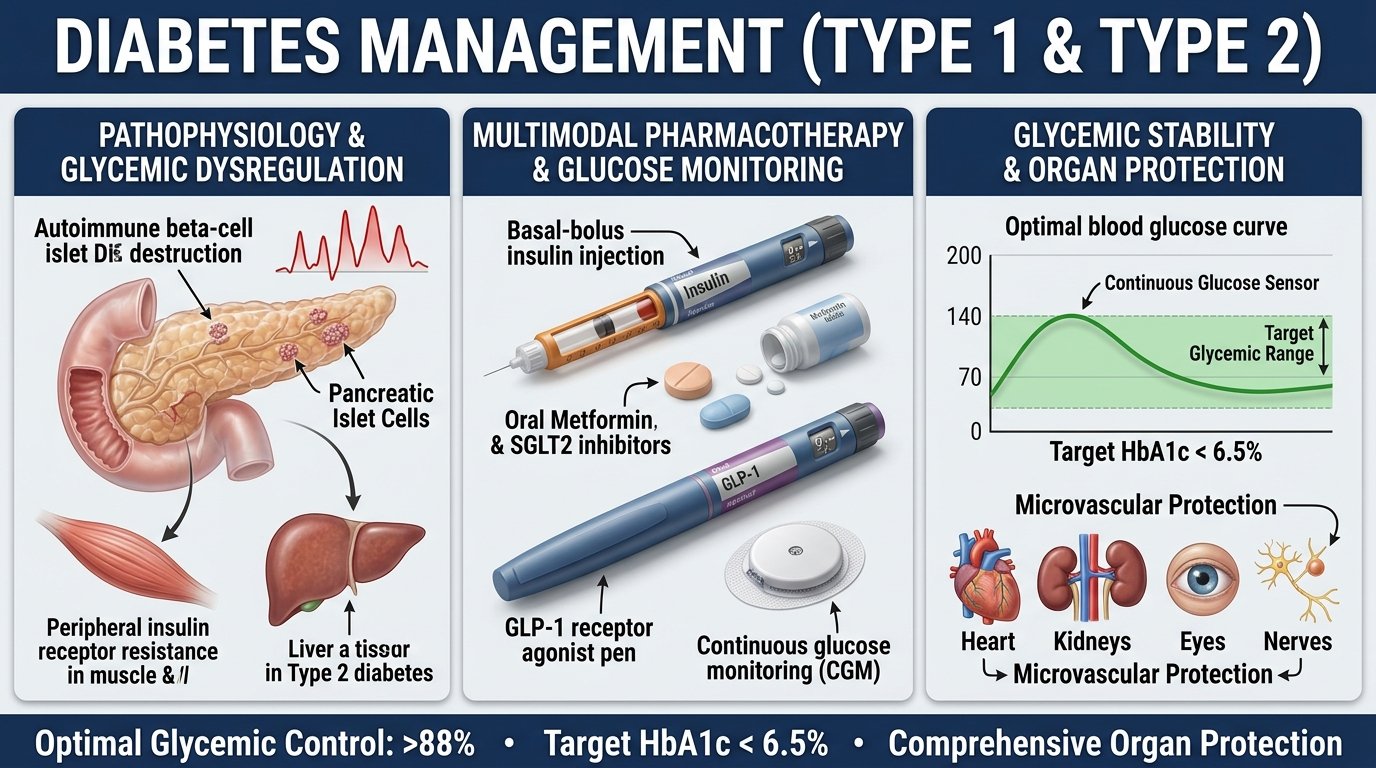 Diabetes management (Type 1 & 2)
Clinical Overview & Disease Information
Comprehensive evidence-based diabetes care utilizing SGLT2 inhibitors, GLP-1 receptor agonists (Semaglutide / Tirzepatide), continuous glucose monitoring (CGM), and intensive insulin regimens to prevent microvascular and macrovascular complications.
Signs & Symptoms
- • Polydipsia (excessive unquenchable thirst) and polyuria (frequent nighttime urination)
- • Unexplained weight loss despite increased appetite
- • Blurry vision and slow-healing cuts
- • Persistent HbA1c elevation (> 8.5%)
- • Diabetic peripheral neuropathy (glove-and-stocking burning/numbness in feet)
- • Microalbuminuria and diabetic retinopathy changes
- • Diabetic Ketoacidosis (DKA) with Kussmaul breathing & fruity acetone breath
- • Hyperosmolar Hyperglycemic State (HHS - blood glucose > 600 mg/dL with confusion)
Causes & Risk Factors
Primary Causes & Etiology
- Autoimmune destruction of pancreatic beta cells (Type 1 Diabetes)
- Peripheral insulin resistance and progressive beta-cell dysfunction (Type 2 Diabetes)
- Visceral adiposity, sedentary lifestyle, and genetic susceptibility
Who is at Higher Risk?
- Patients with HbA1c > 7.0%, metabolic syndrome, or strong family history of diabetes
Diagnostic Evaluation & Testing
| Diagnostic Test | Clinical Purpose / What It Shows |
|---|---|
| HbA1c Glycated Hemoglobin & Continuous Glucose Monitoring (CGM 14-Day TIR) | Quantifies 3-month glycemic control and 24-hour glucose variability / Time-In-Range (TIR) |
| Urinary Microalbumin/Creatinine Ratio & Serum C-Peptide Level | Screens for early diabetic nephropathy and evaluates endogenous insulin reserve |
Comprehensive Treatment Options
Targeted GLP-1/GIP Agonist (Tirzepatide/Semaglutide) & SGLT2i Cardiorenal Protocol
Combination therapy with GLP-1/GIP dual agonists and SGLT2 inhibitors providing cardiorenal protection and glycemic control.
Intensive Basal-Bolus Multiple Daily Injection (MDI) / Pump Therapy
Basal insulin glargine plus prandial rapid-acting insulin lispro before meals.
Advanced Medical Technologies Available in Partner Hospitals
Possible Complications If Untreated
Recovery Timeline, Diet & Lifestyle Care
Recovery Timeline
| Procedure / Stage | Expected Recovery Duration |
|---|---|
| Initial CGM Sensor Placement & Baseline Assessment | 1 to 2 days |
| Medication Titration & TIR Optimization | 2 to 4 weeks |
| Long-Term HbA1c Normalization (< 7.0%) | 3 to 6 months |
Recommended Post-Treatment Diet
- Low glycemic index, high fiber Mediterranean diet
- Consistent carbohydrate counting for mealtime insulin dosing
Essential Lifestyle Changes
- 150 minutes of moderate aerobic exercise per week
- Daily foot inspection for minor cuts/calluses
- Annual dilated eye examination
Prevention & Long-Term Health
Frequently Asked Questions
Can Type 2 Diabetes be reversed with new GLP-1 medications?
GLP-1/GIP dual agonists combined with lifestyle changes achieve long-term glycemic normalization and diabetes remission in many patients.
Top Recommended Specialists Available

Dr. Nutan Agarwal
Head of Department - Gynae Endocrinology & DNB Program Director
View Doctor Profile →
Global Cost Comparison Matrix
| Procedure | USA (Avg) | India (ISG) | Turkey (Avg) | Thailand (Avg) |
|---|---|---|---|---|
| Diabetes management (Type 1 & 2) | $12,000 | $1,200 | $2,500 | $3,000 |
Request Free Clinical Opinion & Cost Estimate
Upload your diagnostic reports or medical summary for a free review by leading specialists within 24-48 hours.
Get Free Treatment EstimateCommonly Prescribed Medications
- Semaglutide (Ozempic/Wegovy) 1mg SC weekly
- Tirzepatide (Mounjaro) 5-15mg SC weekly
- Dapagliflozin 10mg daily
- Metformin XR 1000mg
International Patient Guide
- Passport & Visa
- HbA1c History & Medical Report