
Cochlear Implant Surgical Restoration
Surgical implantation of a multi-channel electronic cochlear implant (Nucleus 7 / Synchrony) into the inner ear cochlea, bypassing damaged hair cells to stimulate the auditory nerve directly in severe-to-profound sensorineural hearing loss.
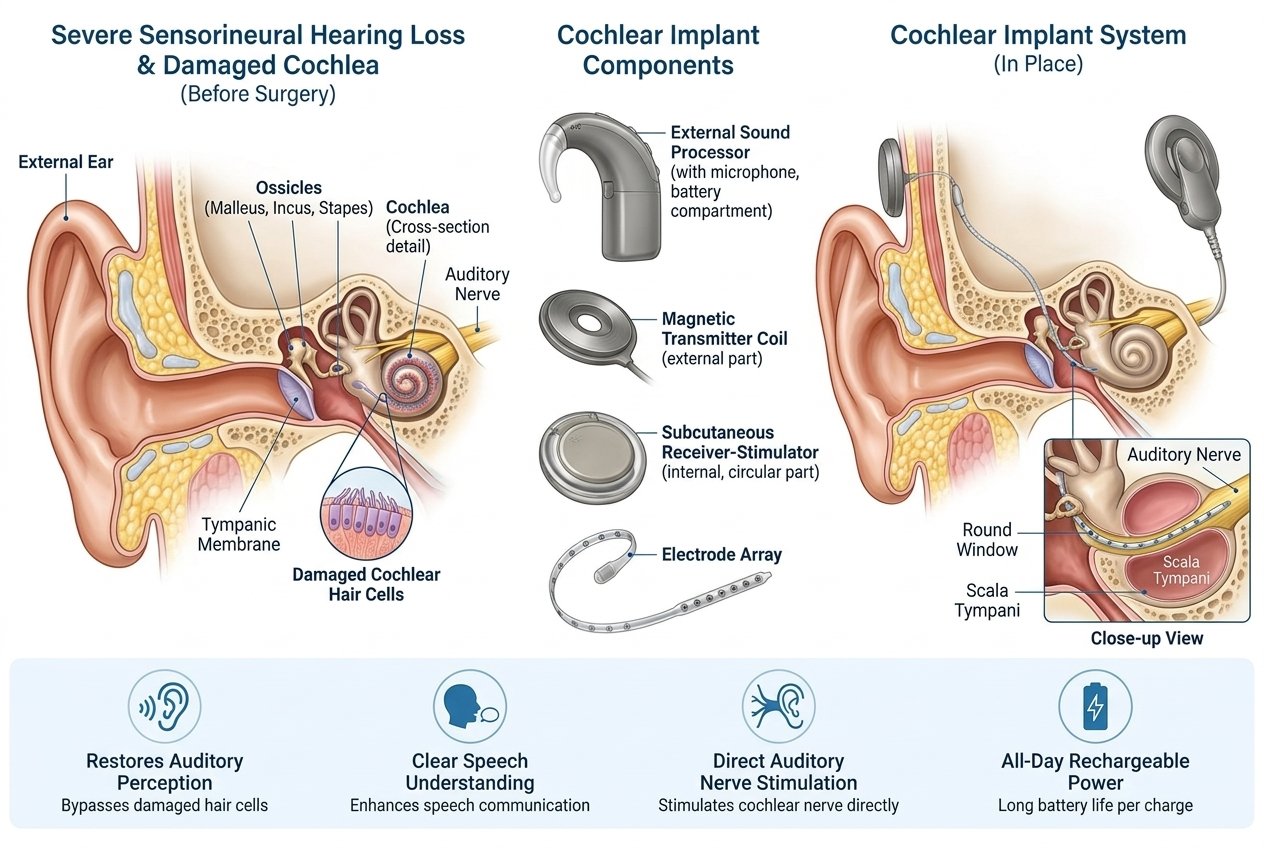 Cochlear implant surgery
Clinical Overview & Disease Information
Surgical implantation of a multi-channel electronic cochlear implant (Nucleus 7 / Synchrony) into the inner ear cochlea, bypassing damaged hair cells to stimulate the auditory nerve directly in severe-to-profound sensorineural hearing loss.
Signs & Symptoms
- • Inability to understand speech despite high-powered hearing aids
- • Difficulty hearing high-pitched sounds and voices in children
- • Profound sensorineural hearing loss (> 90 dB PTA)
- • Complete lack of speech perception
- • Social isolation and communication barrier
- • Sudden bilateral profound sensorineural hearing loss post-meningitis
Causes & Risk Factors
Primary Causes & Etiology
- Congenital inner ear hair cell aplasia / genetic mutations (GJB2 Connexin 26)
- Post-meningitic cochlear ossification
- Ototoxic drug exposure or presbycusis
Who is at Higher Risk?
- Infants born with severe bilateral sensorineural hearing loss
- Adults with progressive profound deafness failing hearing aids
Diagnostic Evaluation & Testing
| Diagnostic Test | Clinical Purpose / What It Shows |
|---|---|
| Pure Tone Audiometry (PTA) & Auditory Brainstem Response (ABR / BERA) | Confirms threshold of bilateral severe-to-profound sensorineural hearing loss |
| High-Resolution Temporal Bone CT & Inner Ear 3.0T MRI | Evaluates cochlear lumen patency, internal auditory canal, and auditory nerve presence |
Comprehensive Treatment Options
Transmastoid Facial Recess Cochlear Implant Electrode Insertion
Cortical mastoidotomy and posterior tympanotomy opening cochleostomy for delicate electrode array insertion into scala tympani.
Bilateral Simultaneous Cochlear Implantation
Simultaneous dual cochlear implantation in both ears for optimal sound localization and binaural hearing.
Advanced Medical Technologies Available in Partner Hospitals
Possible Complications If Untreated
Recovery Timeline, Diet & Lifestyle Care
Recovery Timeline
| Procedure / Stage | Expected Recovery Duration |
|---|---|
| Hospital Discharge | 24 to 48 hours |
| Suture Removal | 7 to 10 days |
| Processor Switch-On & Mapping | 3 to 4 weeks post-op |
| Auditory Verbal Therapy (AVT) | 6 to 12 months |
Recommended Post-Treatment Diet
- Soft, easily chewable diet for 3 days
- Adequate fluid hydration
Essential Lifestyle Changes
- Keep post-auricular incision dry for 10 days
- Avoid head trauma or contact sports
- Attend weekly AVT speech therapy sessions
Prevention & Long-Term Health
Frequently Asked Questions
What is the best age for a child to receive a cochlear implant?
Implantation before 12-18 months of age yields the best speech and language development outcomes.
Top Recommended Specialists Available

Global Cost Comparison Matrix
| Procedure | USA (Avg) | India (ISG) | Turkey (Avg) | Thailand (Avg) |
|---|---|---|---|---|
| Cochlear implant surgery | $50,000 | $8,500 | $14,000 | $16,000 |
Request Free Clinical Opinion & Cost Estimate
Upload your diagnostic reports or medical summary for a free review by leading specialists within 24-48 hours.
Get Free Treatment EstimateCommonly Prescribed Medications
- Amoxicillin-Clavulanate 625mg twice daily
- Paracetamol 500mg as needed
- Otopront Antiseptic Otic Drops
International Patient Guide
- Passport & Medical Visa
- BERA / Audiometry Reports & Temporal Bone CT CDs