
Uterine-Preserving Laparoscopic & Robotic Myomectomy
Uterine-preserving laparoscopic and robotic myomectomy with containment bag in-glove morcellation, removing intramural, subserosal, and submucosal uterine fibroids while preserving fertility.
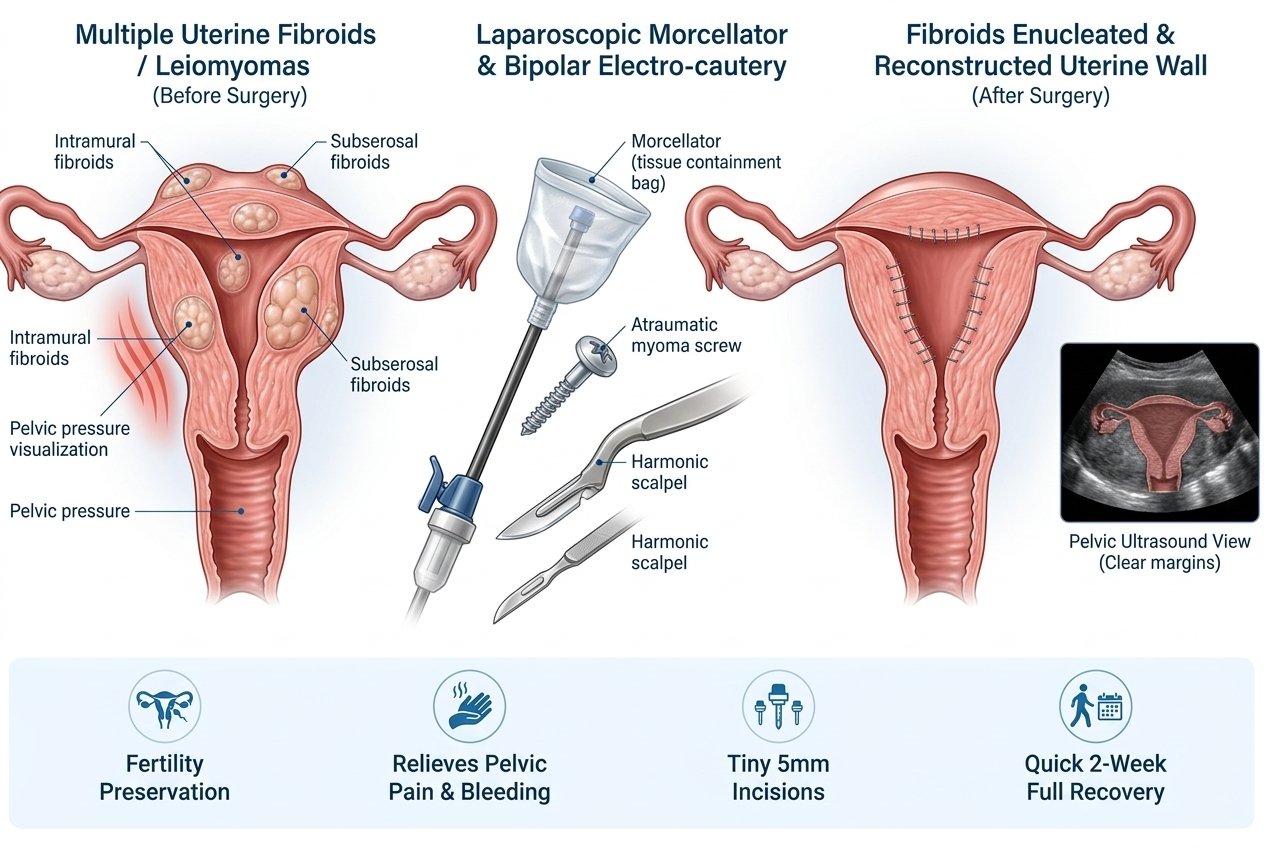 Laparoscopic myomectomy (fibroid removal)
Clinical Overview & Disease Information
Uterine-preserving laparoscopic and robotic myomectomy with containment bag in-glove morcellation, removing intramural, subserosal, and submucosal uterine fibroids while preserving fertility.
Signs & Symptoms
- • Heavy menstrual bleeding (menorrhagia) and pelvic fullness
- • Increased waist size and difficulty wearing fitted clothing
- • Frequent urination due to bladder compression by anterior fibroid
- • Constipation or pelvic pressure from posterior fibroid
- • Infertility or recurrent miscarriages
- • Acute red degeneration of fibroid with severe fever and localized uterine pain
Causes & Risk Factors
Primary Causes & Etiology
- Estrogen and progesterone receptor hypersensitivity in uterine smooth muscle
- Genetic MED12 gene mutations
- Nulliparity and early menarche
Who is at Higher Risk?
- Women of reproductive age seeking fertility preservation while removing symptomatic fibroids
Diagnostic Evaluation & Testing
| Diagnostic Test | Clinical Purpose / What It Shows |
|---|---|
| 3D Transvaginal Ultrasound & Contrast Pelvic MRI | Determines precise fibroid count, size, FIGO classification (0-8), and relation to endometrial cavity |
| Saline Infusion Sonohysterography (SIS) | Evaluates submucosal distortion of endometrial lining |
Comprehensive Treatment Options
Laparoscopic / Robotic Multilayer Myomectomy with In-Bag Contained Morcellation
Keyhole enucleation of fibroids, 3-layer uterine reconstruction with barbed sutures, and contained specimen extraction within an endobag.
Hysteroscopic Myomectomy (Resectoscopic TCRF)
Incisionless transvaginal resection of FIGO 0-1 submucosal fibroids using bipolar resectoscope.
Advanced Medical Technologies Available in Partner Hospitals
Possible Complications If Untreated
Recovery Timeline, Diet & Lifestyle Care
Recovery Timeline
| Procedure / Stage | Expected Recovery Duration |
|---|---|
| Laparoscopic Ward Recovery & Ambulation | 24 to 48 hours |
| Return to Normal Daily Living | 2 weeks |
| Uterine Healing Clearance for Pregnancy | 3 to 6 months |
Recommended Post-Treatment Diet
- High iron & Vitamin C diet to restore hemoglobin levels
- Hydration 2.5L/day
Essential Lifestyle Changes
- Avoid strenuous exercise or heavy lifting > 5kg for 4 weeks
- Wait 3 to 6 months before attempting pregnancy as advised by surgeon
- Daily walking
Prevention & Long-Term Health
Frequently Asked Questions
Can I get pregnant after laparoscopic myomectomy?
Yes, myomectomy preserves your uterus and significantly increases pregnancy rates for women with fertility-impairing fibroids.
Top Recommended Specialists Available

Dr. Nutan Agarwal
Head of Department - Gynae Endocrinology & DNB Program Director
View Doctor Profile →
Dr. Rupinder Sekhon
Chief - Gynae Oncology & Sr. Consultant: Surgical Oncology
View Doctor Profile →
Global Cost Comparison Matrix
| Procedure | USA (Avg) | India (ISG) | Turkey (Avg) | Thailand (Avg) |
|---|---|---|---|---|
| Laparoscopic myomectomy (fibroid removal) | $25,000 | $3,500 | $6,500 | $7,500 |
Request Free Clinical Opinion & Cost Estimate
Upload your diagnostic reports or medical summary for a free review by leading specialists within 24-48 hours.
Get Free Treatment EstimateCommonly Prescribed Medications
- GnRH Agonist (Leuprolide 3.75mg Depot)
- Oral Iron Supplements (Ferrous Ascorbate)
- NSAIDs
International Patient Guide
- Passport & Visa
- Pelvic MRI / Ultrasound Reports