
Bone marrow transplant (allogeneic — related & MUD) Clinical Guide
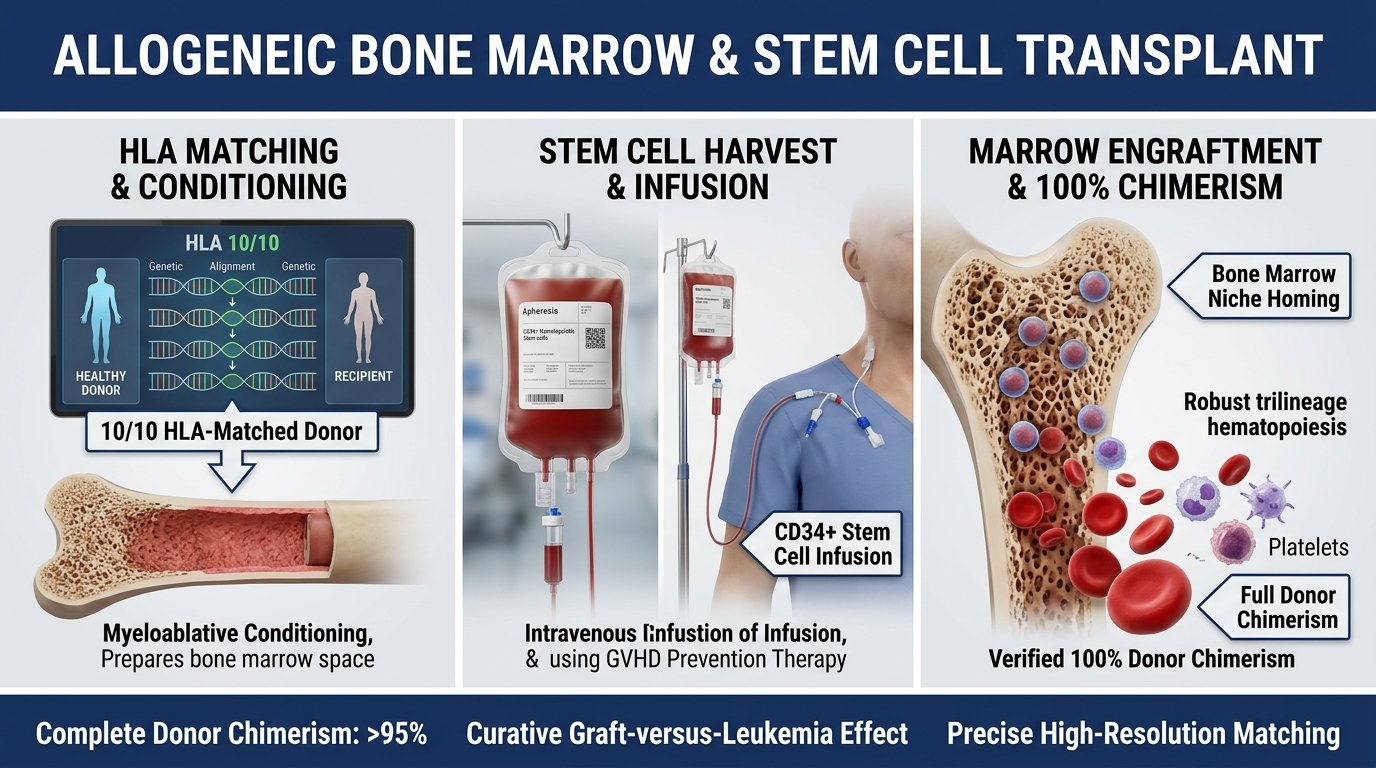
Allogeneic HSCT infuses healthy stem cells from a matched sibling donor (MSD) or 10/10 matched unrelated donor (MUD) from global registries to generate a Graft-Versus-Leukemia (GVL) effect curing acute leukemia and severe aplastic anemia.
 Bone marrow transplant (allogeneic — related & MUD)
Clinical Overview & Disease Information
Allogeneic HSCT infuses healthy stem cells from a matched sibling donor (MSD) or 10/10 matched unrelated donor (MUD) from global registries to generate a Graft-Versus-Leukemia (GVL) effect curing acute leukemia and severe aplastic anemia.
Signs & Symptoms
- • Unexplained severe fatigue, pallor, and dyspnea on exertion
- • Frequent unprovoked bruising, petechiae, or gum bleeding
- • Unexplained low-grade fever, night sweats, or unintentional weight loss
- • Persistent painful lymphadenopathy (swollen neck/axillary nodes)
- • Severe bone pain or pathological fractures (Multiple Myeloma)
- • Recurrent painful vaso-occlusive crises or severe joint hemarthrosis
- • Splenomegaly and mucosal bleeding
- • Neutropenic fever > 100.4°F (38.3°C) during chemotherapy
- • Spontaneous intracranial or retroperitoneal hemorrhage
- • Acute chest syndrome in Sickle Cell Anemia
Causes & Risk Factors
Primary Causes & Etiology
- Clonal hematopoietic stem cell mutations (JAK2, FLT3, NPM1, BCR-ABL1, TP53)
- Genetic hemoglobinopathies (Beta-Thalassemia Major, Sickle Cell Disease)
- Immune-mediated marrow aplasia or platelet autoantibodies
- Factor VIII / IX genetic deficiency (X-linked Hemophilia A & B)
Who is at Higher Risk?
- Patients with diagnosed hematological malignancies or inherited blood disorders
- Individuals requiring bone marrow stem cell transplantation or targeted cellular immunotherapies
Diagnostic Evaluation & Testing
| Diagnostic Test | Clinical Purpose / What It Shows |
|---|---|
| High-Resolution 10-Allele HLA-A, B, C, DRB1, DQB1 Tissue Typing & Chimerism Testing | Comprehensive bone marrow aspirate cytogenetics, flow cytometry immunophenotyping, and molecular NGS testing |
Comprehensive Treatment Options
10/10 HLA-Matched Sibling / Matched Unrelated Donor Allogeneic Stem Cell Infusion
Advanced targeted cellular therapy, stem cell transplantation, or biologic intervention.
Myeloablative / Reduced Intensity Conditioning (RIC) Fludarabine-Busulfan Regimen
Multidisciplinary conditioning chemotherapy or chronic management protocol.
Advanced Medical Technologies Available in Partner Hospitals
Possible Complications If Untreated
Recovery Timeline, Diet & Lifestyle Care
Recovery Timeline
| Procedure / Stage | Expected Recovery Duration |
|---|---|
| HEPA-Filtered BMT Isolation Unit | 14 to 21 days |
| Neutrophil & Platelet Engraftment | 21 to 28 days |
| Outpatient Immunosuppression Taper | 3 to 6 months |
Recommended Post-Treatment Diet
- Strict neutropenic clean diet (well-cooked food, no raw fruits/salads)
- Sterile bottled water
- High protein nutrition
Essential Lifestyle Changes
- Wear N95 mask in public and avoid crowds during immunosuppression
- Take Tacrolimus/Acyclovir at exact 12-hour intervals
- Daily temperature and blood pressure logging
Prevention & Long-Term Health
Frequently Asked Questions
What is the success rate of Bone marrow transplant (allogeneic — related & MUD)?
Cure rates for BMT and CAR-T cell therapy exceed 75-90% in JCI accredited hematology centers of excellence under experienced transplant teams.
Top Recommended Specialists Available

Dr. Gaurav Dixit
Head – Haematology Oncology & Bone Marrow Transplant (Unit II)
View Doctor Profile →
Dr. Arun Singh Danewa
Senior Consultant – Pediatric-Haemato-Oncology & Bone Marrow Transplant (Unit II)
View Doctor Profile →Global Cost Comparison Matrix
| Procedure | USA (Avg) | India (ISG) | Turkey (Avg) | Thailand (Avg) |
|---|---|---|---|---|
| Bone marrow transplant (allogeneic — related & MUD) | $180,000 | $26,000 | $45,000 | $50,000 |
Request Free Clinical Opinion & Cost Estimate
Upload your diagnostic reports or medical summary for a free review by leading specialists within 24-48 hours.
Get Free Treatment EstimateCommonly Prescribed Medications
- Tacrolimus 1mg twice daily
- Mycophenolate Mofetil 500mg
- Post-Transplant Cyclophosphamide (PTCy 50mg/kg)
- Posaconazole
International Patient Guide
- Valid Passport & Medical Visa
- Bone Marrow Biopsy & HLA Tissue Typing CDs
- Hematology Specialist Summary