Autologous Stem Cell Transplantation (ASCT)
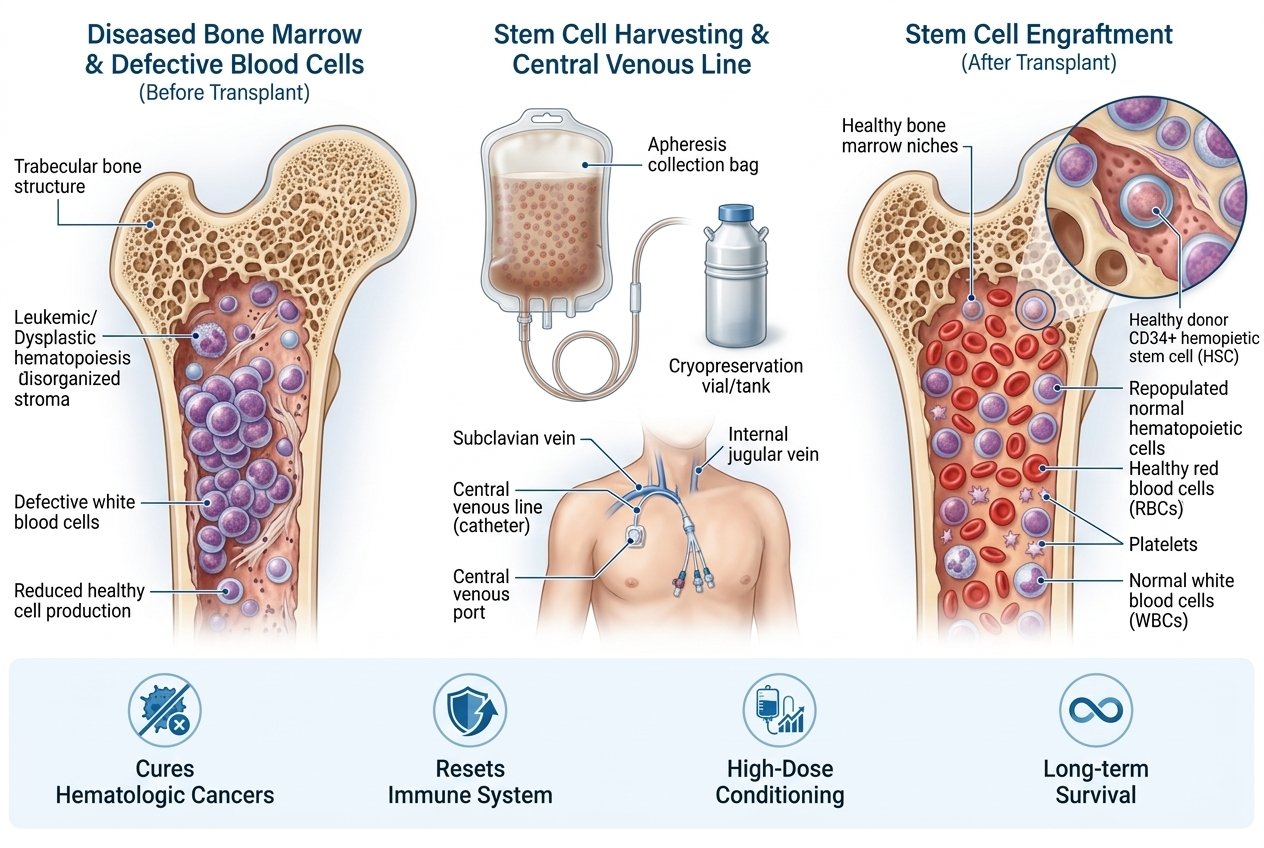
Autologous Hematopoietic Stem Cell Transplantation (ASCT) harvests the patient's own CD34+ blood stem cells, stores them via cryopreservation during high-dose conditioning chemotherapy, and re-infuses them to restore healthy marrow function in multiple myeloma and relapsed lymphoma.
 Bone marrow transplant (autologous)
Clinical Overview & Disease Information
Autologous Hematopoietic Stem Cell Transplantation (ASCT) harvests the patient's own CD34+ blood stem cells, stores them via cryopreservation during high-dose conditioning chemotherapy, and re-infuses them to restore healthy marrow function in multiple myeloma and relapsed lymphoma.
Signs & Symptoms
- • Persistent bone pain, spinal compression, or pathological fractures
- • Fatigue, weakness, and normocytic anemia
- • Serum M-protein spike and Bence-Jones proteinuria
- • Relapsed B-cell non-Hodgkin lymphoma or Hodgkin lymphoma
- • Hypercalcemia and renal impairment (CRAB criteria)
- • Acute spinal cord compression
- • Hyperviscosity syndrome with vision loss
Causes & Risk Factors
Primary Causes & Etiology
- Clonal plasma cell dyscrasias (Multiple Myeloma)
- Relapsed or refractory Diffuse Large B-Cell Lymphoma (DLBCL) & Hodgkin Lymphoma
- Primary systemic AL amyloidosis
Who is at Higher Risk?
- Multiple Myeloma patients post-induction
- Relapsed Hodgkin/Non-Hodgkin Lymphoma patients in chemosensitive remission
Diagnostic Evaluation & Testing
| Diagnostic Test | Clinical Purpose / What It Shows |
|---|---|
| Bone Marrow Aspirate & Trephine Biopsy with CD34+ Flow Cytometry | Confirms baseline plasma cell percentage and CD34+ stem cell mobilization yield (> 2x10^6 cells/kg) |
| Whole-Body 18F-FDG PET-CT & Serum Protein Electrophoresis (SPEP) | Stages lymphoma disease burden and quantifies monoclonal immunoglobulin M-spike |
Comprehensive Treatment Options
Autologous Peripheral Blood Stem Cell Mobilization (G-CSF + Plerixafor) & High-Dose Conditioning
Leukapheresis stem cell harvesting, high-dose Melphalan 200mg/m2 or BEAM conditioning, and intravenous stem cell re-infusion.
Post-ASCT Maintenance Therapy (Lenalidomide / Bortezomib)
Long-term oral immunomodulatory maintenance to suppress minimal residual disease (MRD).
Advanced Medical Technologies Available in Partner Hospitals
Possible Complications If Untreated
Recovery Timeline, Diet & Lifestyle Care
Recovery Timeline
| Procedure / Stage | Expected Recovery Duration |
|---|---|
| High-Dose Conditioning & Stem Cell Infusion | Days -2 to 0 |
| Aplasia & HEPA Isolation Ward | Days +1 to +12 |
| Neutrophil & Platelet Engraftment | Days +12 to +16 |
| Outpatient Recovery & Return to Work | 3 to 6 months |
Recommended Post-Treatment Diet
- Strict neutropenic clean diet (cooked food only, no raw salads/fresh fruit)
- Sterile bottled water
Essential Lifestyle Changes
- Wear N95 mask in public during first 100 days
- Take daily antifungal and antiviral prophylaxis
- Avoid crowds and pets
Prevention & Long-Term Health
Frequently Asked Questions
Is autologous BMT safer than allogeneic BMT?
Yes, autologous BMT uses your own stem cells, completely eliminating Graft-Versus-Host Disease (GVHD) risk.
Top Recommended Specialists Available

Dr. Gaurav Dixit
Head – Haematology Oncology & Bone Marrow Transplant (Unit II)
View Doctor Profile →
Dr. Arun Singh Danewa
Senior Consultant – Pediatric-Haemato-Oncology & Bone Marrow Transplant (Unit II)
View Doctor Profile →Global Cost Comparison Matrix
| Procedure | USA (Avg) | India (ISG) | Turkey (Avg) | Thailand (Avg) |
|---|---|---|---|---|
| Bone marrow transplant (autologous) | $150,000 | $16,500 | $35,000 | $40,000 |
Request Free Clinical Opinion & Cost Estimate
Upload your diagnostic reports or medical summary for a free review by leading specialists within 24-48 hours.
Get Free Treatment EstimateCommonly Prescribed Medications
- Filgrastim (G-CSF) 300mcg SC
- Plerixafor 24mg SC
- Acyclovir 400mg twice daily
- Fluconazole 200mg daily
International Patient Guide
- Passport & Visa
- Bone Marrow Biopsy CDs & PET-CT Scan Reports