
RIRS Thulium Laser & Mini-PCNL Stone Removal
Retrograde Intrarenal Surgery (RIRS) using flexible digital ureteroscopy with Holmium:YAG / Thulium fiber laser dusting, and Mini-PCNL (Percutaneous Nephrolithotomy) for complex staghorn kidney stones.
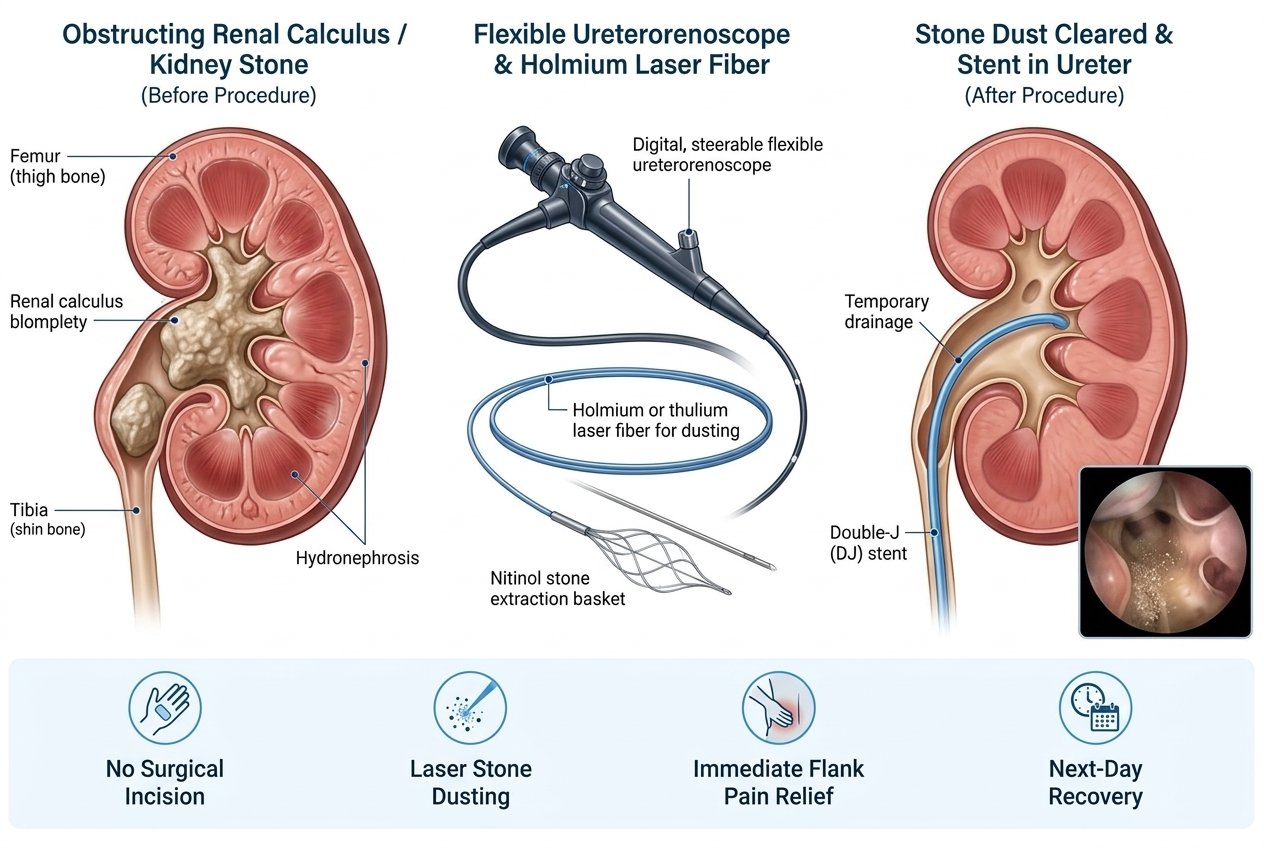 Kidney stone removal (laser PCNL, RIRS)
Clinical Overview & Disease Information
Retrograde Intrarenal Surgery (RIRS) using flexible digital ureteroscopy with Holmium:YAG / Thulium fiber laser dusting, and Mini-PCNL (Percutaneous Nephrolithotomy) for complex staghorn kidney stones.
Signs & Symptoms
- • Severe flank / loin-to-groin colicky pain
- • Microscopic or gross hematuria (pink/red urine)
- • Nausea, vomiting, and urinary urgency/dysuria
- • Persistent lower back dull ache
- • Recurrent urinary tract infections (UTIs)
- • Anuria (complete cessation of urine output)
- • Urosepsis with high fever (> 101°F) and rigors
Causes & Risk Factors
Primary Causes & Etiology
- Calcium oxalate, uric acid, or struvite stone precipitation
- Inadequate daily fluid intake / chronic dehydration
- Hyperparathyroidism, gout, or tubular acidosis
Who is at Higher Risk?
- Patients with kidney stones > 5mm seeking 100% stone clearance without open surgery
Diagnostic Evaluation & Testing
| Diagnostic Test | Clinical Purpose / What It Shows |
|---|---|
| Non-Contrast CT KUB (1mm Ultra-Thin Slices) | Accurately quantifies stone location, size, density (Hounsfield Units), and skin-to-stone distance |
| 24-Hour Urinary Metabolic Stone Risk Profile | Measures urinary calcium, oxalate, citrate, uric acid, and pH to prevent recurrence |
Comprehensive Treatment Options
Retrograde Intrarenal Surgery (RIRS) with Thulium Fiber Laser Stone Dusting
Incisionless flexible ureteroscopy guided through urethra into kidney calyces, pulverizing stones to fine dust using 0.2mm Thulium laser fiber.
Mini-PCNL (Percutaneous Nephrolithotomy) with Vacuum Suction Sheath
Keyhole 14Fr percutaneous tract into kidney for staghorn calculus fragmentation.
Advanced Medical Technologies Available in Partner Hospitals
Possible Complications If Untreated
Recovery Timeline, Diet & Lifestyle Care
Recovery Timeline
| Procedure / Stage | Expected Recovery Duration |
|---|---|
| Day-Care / 24-Hour Ward Recovery | 24 hours |
| DJ Stent Removal (Outpatient) | 7 to 10 days |
| Complete Stone-Free Normalization | 2 weeks |
Recommended Post-Treatment Diet
- High fluid intake (> 3.0L water/day)
- Low sodium, low animal protein diet
- Avoid high oxalate foods (spinach, nuts, chocolate)
Essential Lifestyle Changes
- Maintain urine output > 2.5L daily
- Strain urine for stone dust analysis
- Take potassium citrate liquid as directed
Prevention & Long-Term Health
Frequently Asked Questions
Is RIRS laser stone removal painful?
No, RIRS is performed under general or spinal anesthesia, so you feel no pain during the procedure.
Top Recommended Specialists Available

Dr. Varun Mittal
Head - Kidney Transplant & Associate Chief - Uro-Oncology & Robotic Surgery (Unit I)
View Doctor Profile →
Dr. Rajiv Yadav
Chairperson Urology & Head, Urologic Oncology & Robotic Surgery (Unit I)
View Doctor Profile →
Global Cost Comparison Matrix
| Procedure | USA (Avg) | India (ISG) | Turkey (Avg) | Thailand (Avg) |
|---|---|---|---|---|
| Kidney stone removal (laser PCNL, RIRS) | $15,000 | $2,500 | $4,200 | $4,800 |
Request Free Clinical Opinion & Cost Estimate
Upload your diagnostic reports or medical summary for a free review by leading specialists within 24-48 hours.
Get Free Treatment EstimateCommonly Prescribed Medications
- Tamsulosin 0.4mg daily
- Potassium Citrate Liquid
- Ciprofloxacin 500mg
- Paracetamol 1g
International Patient Guide
- Passport & Visa
- CT KUB Scan CDs & Kidney Function Test Reports