
da Vinci Robotic Radical Prostatectomy (RALP)
da Vinci robotic-assisted laparoscopic radical prostatectomy (RALP) with nerve-sparing techniques and Retzius-sparing approach for localized prostate cancer, preserving erectile potency and urinary continence.
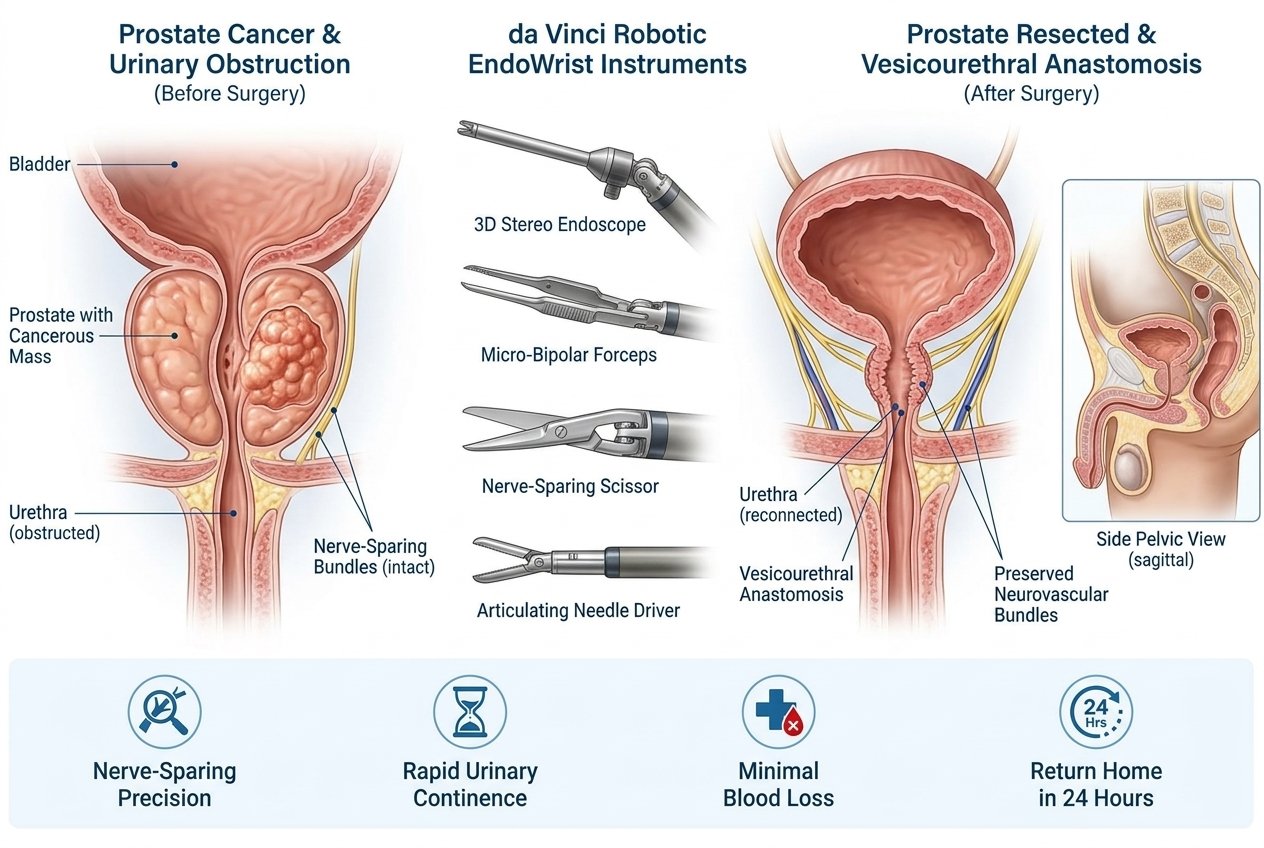 Robotic prostate surgery (RALP)
Clinical Overview & Disease Information
da Vinci robotic-assisted laparoscopic radical prostatectomy (RALP) with nerve-sparing techniques and Retzius-sparing approach for localized prostate cancer, preserving erectile potency and urinary continence.
Signs & Symptoms
- • Asymptomatic elevated Serum PSA (> 4.0 ng/ml)
- • Mild urinary hesitancy or weak stream
- • Urinary frequency, urgency, and nocturia
- • Hematuria or hematospermia (blood in semen)
- • Hard nodule felt on Digital Rectal Exam (DRE)
- • Acute urinary retention or severe bone pain due to metastatic disease
Causes & Risk Factors
Primary Causes & Etiology
- Prostate Adenocarcinoma arising in peripheral zone of prostate
- Age-related somatic gene mutations (TP53, PTEN, BRCA2)
- Family history of prostate or breast cancer
Who is at Higher Risk?
- Men aged 50+ with elevated PSA or PIRADS 4/5 lesions on MRI
Diagnostic Evaluation & Testing
| Diagnostic Test | Clinical Purpose / What It Shows |
|---|---|
| Multiparametric 3.0T Prostate MRI (mpMRI PI-RADS v2.1 Score) | Visualizes tumor localization, extraprostatic extension (ECE), and neurovascular bundle involvement |
| Transperineal MRI-Fusion Targeted Prostate Biopsy & PSMA PET-CT | Provides precise Gleason score histopathology and excludes distant nodal/bone metastases |
Comprehensive Treatment Options
da Vinci Xi Retzius-Sparing Nerve-Preserving Robotic Radical Prostatectomy
3D HD 10x magnified robotic excision of prostate and seminal vesicles with micro-nerve sparing of cavernous nerves and vesicourethral anastomosis.
Open Radical Retropubic Prostatectomy with Extended Pelvic Lymphadenectomy
Traditional open pelvic prostate cancer resection.
Advanced Medical Technologies Available in Partner Hospitals
Possible Complications If Untreated
Recovery Timeline, Diet & Lifestyle Care
Recovery Timeline
| Procedure / Stage | Expected Recovery Duration |
|---|---|
| Robotic Ward Ambulation & Discharge | 24 to 48 hours |
| Foley Catheter Removal | 7 to 10 days |
| Full Continence & Active Physical Living | 3 to 6 weeks |
Recommended Post-Treatment Diet
- High fiber diet to prevent straining during bowel movements
- Hydration 2.5L/day
Essential Lifestyle Changes
- Perform daily Kegel pelvic floor exercises starting Day 1 post-catheter removal
- Avoid heavy lifting > 5kg for 4 weeks
- Take daily low-dose Tadalafil 5mg for penile rehab
Prevention & Long-Term Health
Frequently Asked Questions
Will I be continent after robotic prostate surgery?
With da Vinci nerve-sparing and Retzius-sparing techniques, over 90-95% of men regain complete urinary control within 1 to 3 months.
Top Recommended Specialists Available

Dr. Varun Mittal
Head - Kidney Transplant & Associate Chief - Uro-Oncology & Robotic Surgery (Unit I)
View Doctor Profile →
Dr. Rajiv Yadav
Chairperson Urology & Head, Urologic Oncology & Robotic Surgery (Unit I)
View Doctor Profile →
Global Cost Comparison Matrix
| Procedure | USA (Avg) | India (ISG) | Turkey (Avg) | Thailand (Avg) |
|---|---|---|---|---|
| Robotic prostate surgery (RALP) | $45,000 | $7,500 | $14,000 | $16,000 |
Request Free Clinical Opinion & Cost Estimate
Upload your diagnostic reports or medical summary for a free review by leading specialists within 24-48 hours.
Get Free Treatment EstimateCommonly Prescribed Medications
- Tadalafil 5mg daily (Penile Rehab)
- Bicalutamide 50mg
- Ciprofloxacin 500mg
International Patient Guide
- Passport & Visa
- mpMRI & Prostate Biopsy Histopathology Reports