
Microsurgical 3D Neuronavigation Brain Tumor Surgery
Microsurgical craniotomy and 3D neuronavigation-guided resection of benign and malignant brain tumors (gliomas, meningiomas, acoustic neuromas) maximizing extent of resection while preserving speech and motor pathways.
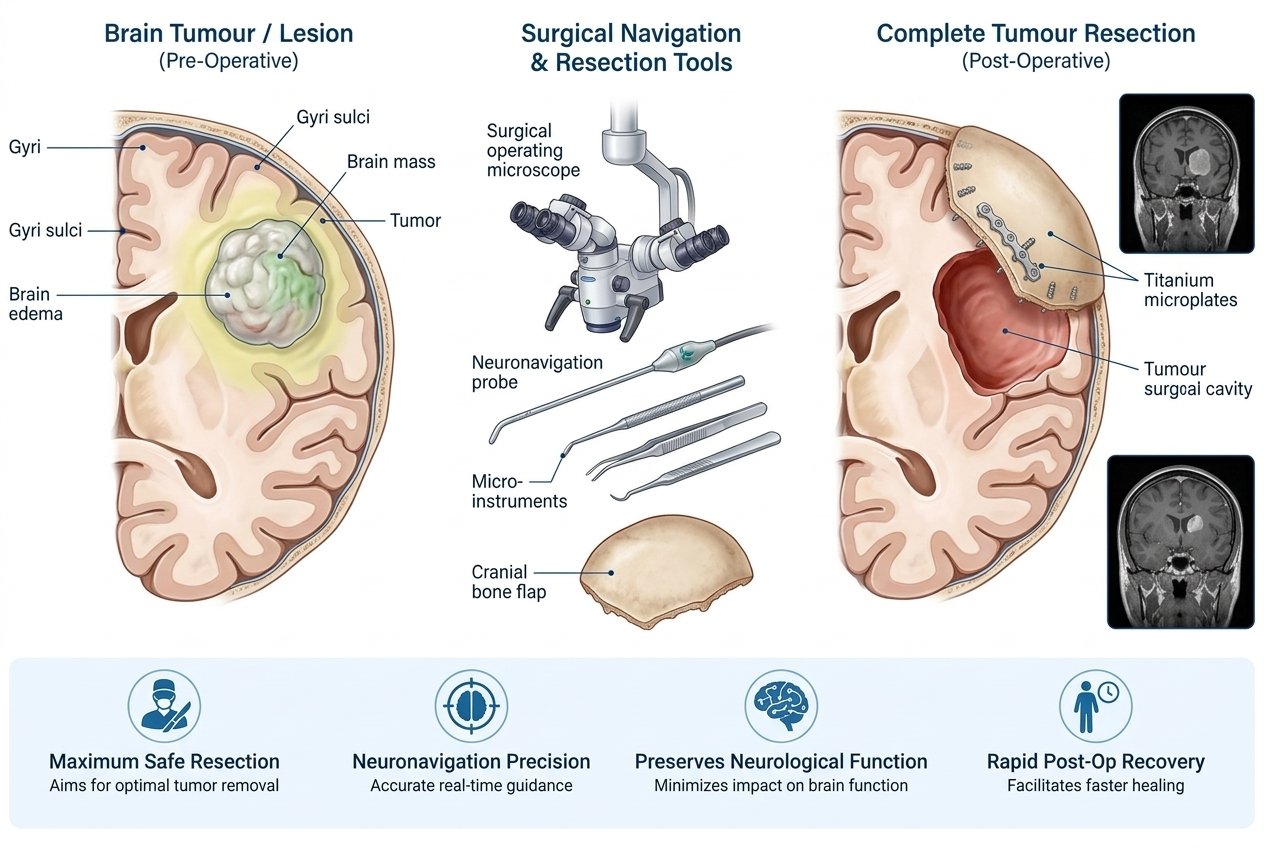 Brain tumour surgery
Clinical Overview & Disease Information
Microsurgical craniotomy and 3D neuronavigation-guided resection of benign and malignant brain tumors (gliomas, meningiomas, acoustic neuromas) maximizing extent of resection while preserving speech and motor pathways.
Signs & Symptoms
- • Persistent morning headaches that worsen with coughing or straining
- • Unexplained nausea and projectile vomiting
- • New onset seizures or focal twitching
- • Focal neurological deficit (hemiparesis, facial asymmetry, dysphasia)
- • Visual field loss or optic disc papilledema
- • Personality changes, memory decline, or executive dysfunction
- • Sudden loss of consciousness / coma due to brain herniation
- • Status epilepticus refractory to antiepileptics
Causes & Risk Factors
Primary Causes & Etiology
- Somatic gene mutations (IDH1/IDH2, TERT promoter, 1p/19q codeletion, MGMT methylation)
- Prior ionizing radiation exposure to head
- Hereditary neurofibromatosis (NF1 / NF2) & Von Hippel-Lindau (VHL) syndromes
Who is at Higher Risk?
- Adults aged 30-70 with intracranial space-occupying lesions
- Patients with systemic primary cancers (lung, breast, melanoma) with brain metastases
Diagnostic Evaluation & Testing
| Diagnostic Test | Clinical Purpose / What It Shows |
|---|---|
| 3.0T Brain MRI with Contrast & DTI Tractography | Maps tumor boundaries, peritumoral edema, and corticospinal motor/speech tract proximity |
| Functional MRI (fMRI) & MR Spectroscopy (MRS) | Identifies eloquent speech/motor cortex and choline/N-acetylaspartate metabolite ratios |
Comprehensive Treatment Options
Microsurgical 3D Neuronavigation Craniotomy with Intraoperative Ultrasound
Keyhole or stealth craniotomy with sub-millimeter electromagnetic guidance and Cavitron Ultrasonic Surgical Aspirator (CUSA).
Fluorescence-Guided 5-ALA (Gliolan) Resection + Gliadel Wafer Implantation
Fluorescence-guided resection of high-grade glioblastomas under blue-light operating microscope.
Advanced Medical Technologies Available in Partner Hospitals
Possible Complications If Untreated
Recovery Timeline, Diet & Lifestyle Care
Recovery Timeline
| Procedure / Stage | Expected Recovery Duration |
|---|---|
| Neuro ICU Monitoring | 24 to 48 hours |
| Neurosurgical Ward Walking | 4 to 6 days |
| Outpatient Neuro-Rehabilitation | 4 to 6 weeks |
Recommended Post-Treatment Diet
- High protein brain recovery diet
- Adequate hydration
- Swallow assessment prior to solid foods
Essential Lifestyle Changes
- Take antiepileptic medications at exact scheduled times
- No driving for 6 months post-seizure
- Daily gentle physical therapy
Prevention & Long-Term Health
Frequently Asked Questions
What is the goal of brain tumor surgery?
The main goal is maximal safe tumor resection to relieve intracranial pressure while preserving speech and motor function.
Top Recommended Specialists Available

Dr. Ashish Chakravarty
Head - Neurosciences Pain Medicine & Principal Consultant - Neuro Anaesthesia
View Doctor Profile →
Dr. Aditya Gupta
Chairperson - Neurosurgery & CNS Radiosurgery & Co-Chief - Cyberknife Centre
View Doctor Profile →
Dr. Rajesh Kumar Singh
Head - Clinical, Emergency & Trauma Services & Coordinator Medical Education
View Doctor Profile →
Dr. Snehal Deshpande
Consultant - Paediatric Physiotherapy & Neuro-Rehabilitation
View Doctor Profile →
Dr. Sweetha Susanne Mohan
Sr. Consultant - Neuroanaesthesia & Neuro Critical Care
View Doctor Profile →
Global Cost Comparison Matrix
| Procedure | USA (Avg) | India (ISG) | Turkey (Avg) | Thailand (Avg) |
|---|---|---|---|---|
| Brain tumour surgery | $55,000 | $7,500 | $14,000 | $16,000 |
Request Free Clinical Opinion & Cost Estimate
Upload your diagnostic reports or medical summary for a free review by leading specialists within 24-48 hours.
Get Free Treatment EstimateCommonly Prescribed Medications
- Dexamethasone 8mg IV/oral
- Levetiracetam (Keppra) 500mg twice daily
- Mannitol 20% IV
- Pantoprazole 40mg
International Patient Guide
- Passport & Visa
- 3.0T Brain MRI CDs & Histopathology Biopsy Reports