
Orthopaedic Oncology & Limb Salvage
Bone Tumour Surgery & Limb Salvage (often called limb-sparing surgery) is the modern standard of care for most malignant bone tumors (bone sarcomas) in the arms or legs. Historically, primary bone cancer was frequently treated with amputation. Today, advancements in surgical techniques, chemotherapy, and biomechanical engineering allow surgeons to remove the tumor while preserving the limb and restoring its function in over 85% of cases.
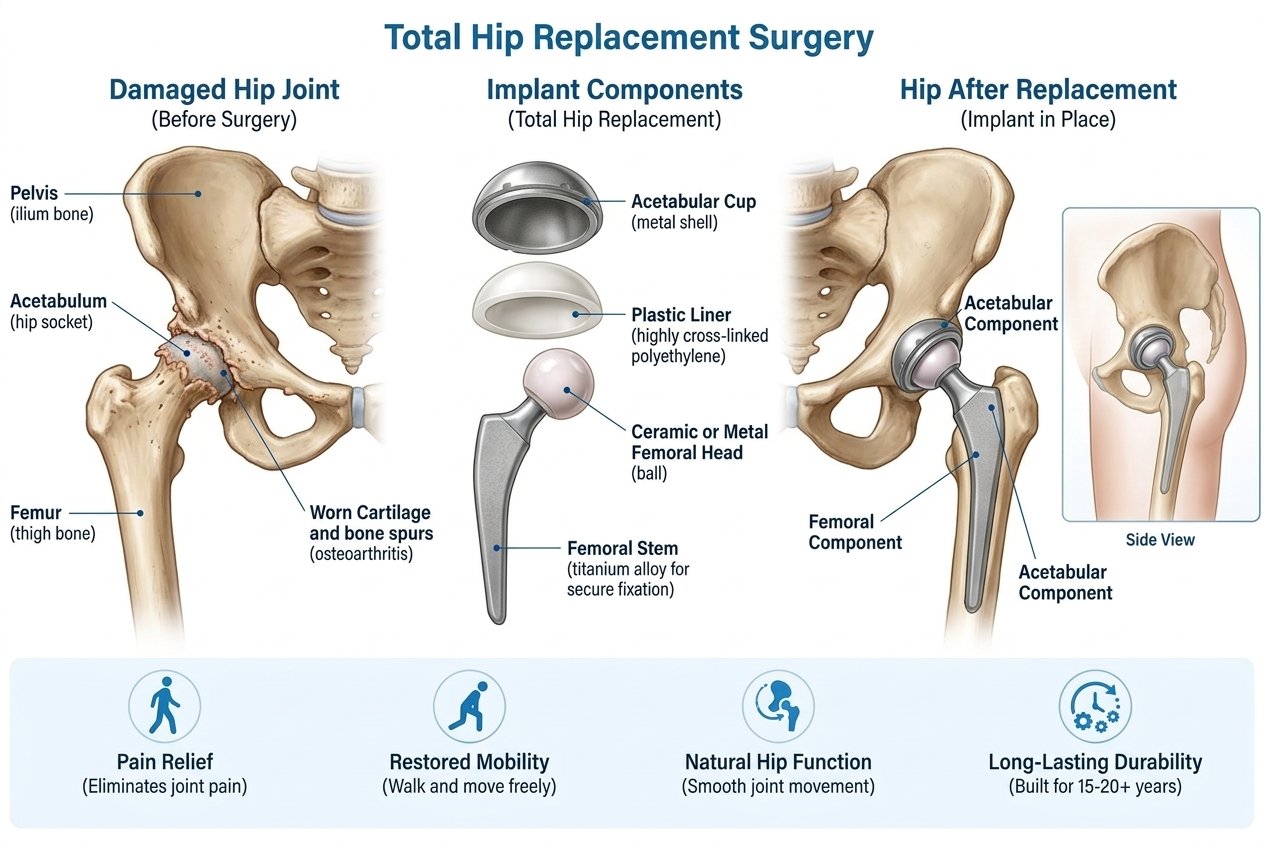 Bone tumour surgery & limb salvage
Clinical Overview & Disease Information
Bone Tumour Surgery & Limb Salvage (often called limb-sparing surgery) is the modern standard of care for most malignant bone tumors (bone sarcomas) in the arms or legs. Historically, primary bone cancer was frequently treated with amputation. Today, advancements in surgical techniques, chemotherapy, and biomechanical engineering allow surgeons to remove the tumor while preserving the limb and restoring its function in over 85% of cases.
Signs & Symptoms
- • Early Deep bone pain & palpable lump during activity
- • Mild stiffness after rest
- • Persistent Deep bone pain & palpable lump
- • Difficulty with daily mobility
- • Pain disturbing sleep
- • Severe acute pain with inability to walk
- • High fever with joint redness
Causes & Risk Factors
Primary Causes & Etiology
- Osteosarcoma & Ewing Sarcoma
- Post-traumatic joint injury
- Age-related cartilage degeneration
Who is at Higher Risk?
- Patients diagnosed with Osteosarcoma & Ewing Sarcoma
- Adults over 45 years
Diagnostic Evaluation & Testing
| Diagnostic Test | Clinical Purpose / What It Shows |
|---|---|
| 3D Imaging & X-Ray for Bone tumour surgery & limb salvage | Precision anatomical mapping and structural evaluation |
Comprehensive Treatment Options
Minimally Invasive: Keyhole Bone tumour surgery & limb salvage
Advanced keyhole procedure with minimal soft tissue disruption.
Surgical: Reconstruction for Bone tumour surgery & limb salvage
Comprehensive surgical intervention for complex anatomical cases.
Advanced Medical Technologies Available in Partner Hospitals
Possible Complications If Untreated
Recovery Timeline, Diet & Lifestyle Care
Recovery Timeline
| Procedure / Stage | Expected Recovery Duration |
|---|---|
| Inpatient Recovery | 3 to 5 days |
| Physical Therapy & Walking | 3 to 4 weeks |
| Full Active Recovery | 6 to 8 weeks |
Recommended Post-Treatment Diet
- High protein healing diet
- Calcium & Vitamin D3
- 2.5L daily hydration
Essential Lifestyle Changes
- Targeted physical therapy
- Avoid heavy lifting
- Maintain healthy body weight
Prevention & Long-Term Health
Frequently Asked Questions
What is bone tumour surgery?
Bone tumour surgery is performed to remove a tumour from the bone while preserving as much healthy bone, joint, muscle, and nerve function as possible. The exact procedure depends on the tumour type, size, location, and whether it is benign or malignant.
What is limb salvage surgery?
Limb salvage is a surgical approach used to remove a bone or soft-tissue tumour while preserving the affected arm or leg, avoiding amputation when it is medically and oncologically safe to do so.
Does limb salvage mean the cancer is completely removed?
The primary goal is to remove the tumour with an adequate margin of healthy tissue. Limb preservation is considered only when the tumour can be safely removed without compromising cancer control.
When is limb salvage possible?
It may be possible when the tumour can be removed completely and the major nerves and blood vessels can either be preserved or safely reconstructed. Advanced imaging and biopsy results help the surgical team determine whether limb salvage is appropriate.
When might amputation still be necessary?
Amputation may be recommended when the tumour extensively involves critical nerves or blood vessels, causes severe tissue destruction or infection, or cannot be removed safely while achieving adequate cancer control.
What tests are needed before surgery?
Evaluation may include X-rays, MRI or CT scans, chest imaging, blood tests, and—most importantly—a properly planned biopsy to determine the exact tumour type and grade. Additional scans may be required to check whether the tumour has spread.
Can the removed bone be replaced?
Yes. Depending on the location and size of the bone defect, reconstruction may involve a metal endoprosthesis, bone graft, allograft, custom implant, or other reconstructive technique.
Will I be able to walk normally after limb salvage surgery?
Many patients regain useful function, but recovery varies considerably. It depends on the tumour location, reconstruction, muscle and nerve involvement, and rehabilitation. Some patients may require physiotherapy and temporary or permanent walking support.
How long does recovery take?
Recovery varies according to the operation and reconstruction performed. Hospitalization may range from several days to longer periods, while functional rehabilitation can continue for months.
Is chemotherapy or radiotherapy needed?
t depends on the tumour diagnosis. Some malignant bone tumours are treated with chemotherapy before and/or after surgery, while radiotherapy may be appropriate for selected tumours or specific clinical situations.
Can bone tumours come back after surgery?
There is a possibility of local recurrence or spread to other parts of the body, depending on the tumour type and stage. Regular follow-up with imaging and clinical examinations is therefore important.
What are the possible risks of limb salvage surgery?
Potential complications include infection, bleeding, blood clots, nerve or blood-vessel injury, wound problems, implant failure or loosening, fracture, stiffness, and the possibility of further surgery. Your surgeon will discuss risks specific to your case.
Can children undergo limb salvage surgery?
Yes. Children with bone tumours may be candidates for specialised limb-salvage procedures. Because children are still growing, reconstruction may require specialised techniques designed to accommodate future growth.
What should I do if I have been diagnosed with a bone tumour?
Seek evaluation from a specialist centre experienced in orthopaedic oncology and limb-salvage surgery. Bring your biopsy report, pathology slides/blocks if available, X-rays, MRI/CT scans, and previous medical records for review.
Top Recommended Specialists Available

Dr. I P S Oberoi
Chairperson - Orthopaedics Program & Chief – Robotic Joint Replacement & Arthroscopy Surgery
View Doctor Profile →
Dr. (Col) Suvasish Chakraberty
Sr. Consultant - Orthopaedics & Joint Replacement
View Doctor Profile →
Dr. (Prof.) Ravi Sauhta
Chief and HOD - Orthopaedics & Joint Replacement (Unit VI)
View Doctor Profile →
Dr. Sanjay Sarup
Head – Orthopaedics (Unit-II) & Chief – Paediatric Orthopaedics & Spine Surgery
View Doctor Profile →
Global Cost Comparison Matrix
| Procedure | USA (Avg) | India (ISG) | Turkey (Avg) | Thailand (Avg) |
|---|---|---|---|---|
| Bone tumour surgery & limb salvage | $42,000 | $10,500 | $8,500 | $9,500 |
Request Free Clinical Opinion & Cost Estimate
Upload your diagnostic reports or medical summary for a free review by leading specialists within 24-48 hours.
Get Free Treatment EstimateCommonly Prescribed Medications
- Etoricoxib 90mg daily
- Paracetamol 1g as needed
- Calcium Carbonate + D3
International Patient Guide
- Valid Passport & Visa
- Medical Records & X-Ray CDs