
Infrainguinal Saphenous Vein Arterial Bypass Surgery
Infragenicular autologous saphenous vein or Dacron/ePTFE synthetic bypass grafting (Femoral-Popliteal / Femoral-Distal Tibial Bypass) restoring lower limb arterial blood supply in critical limb ischemia.
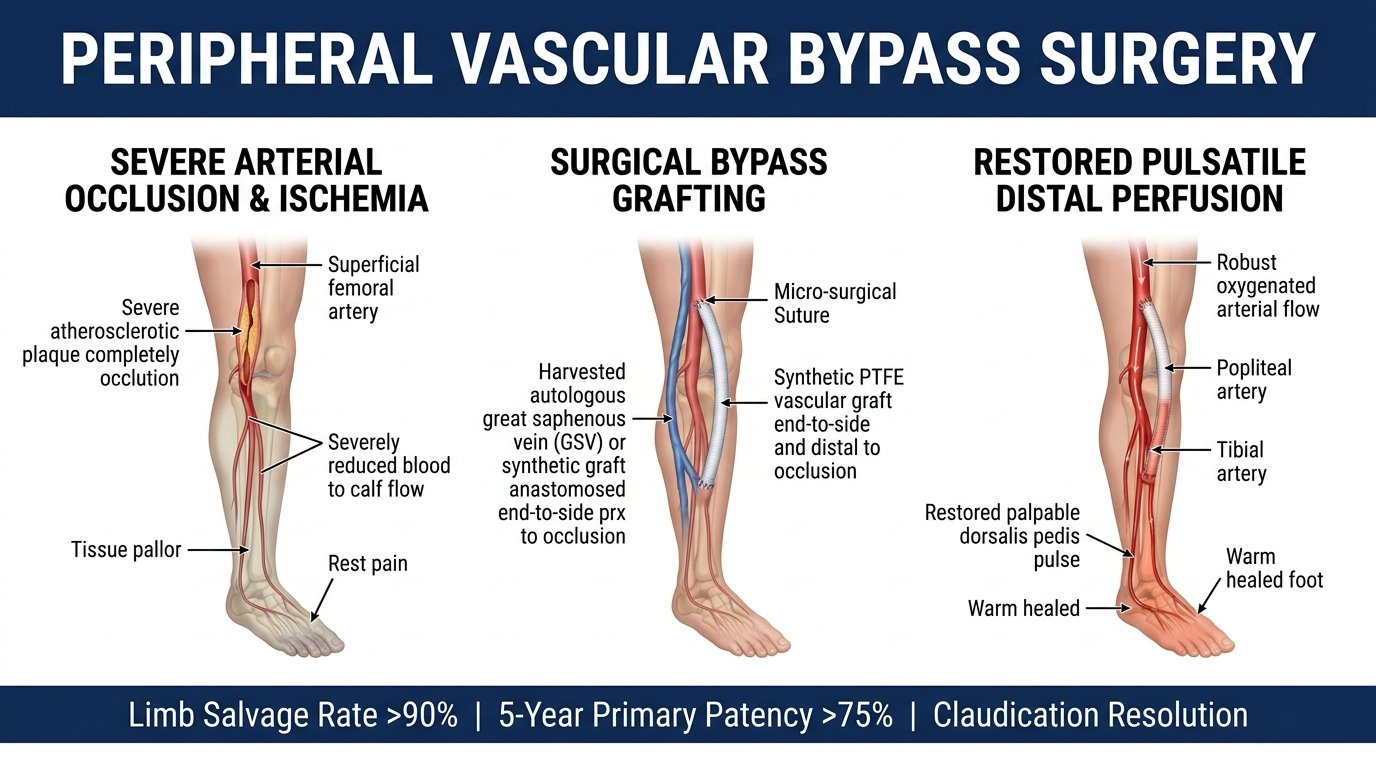 Peripheral vascular bypass surgery
Clinical Overview & Disease Information
Infragenicular autologous saphenous vein or Dacron/ePTFE synthetic bypass grafting (Femoral-Popliteal / Femoral-Distal Tibial Bypass) restoring lower limb arterial blood supply in critical limb ischemia.
Signs & Symptoms
- • Intermittent claudication (cramping calf pain when walking 100 meters, relieved by rest)
- • Coldness and diminished pulse in lower foot
- • Ischemic rest pain (severe forefoot burning pain keeping patient awake at night)
- • Non-healing arterial ulceration on toes/heel
- • Dry black gangrene of toes
- • Acute limb ischemia with sudden loss of sensation, motor function, and absent pulses
Causes & Risk Factors
Primary Causes & Etiology
- Severe diffuse atherosclerotic occlusive disease of superficial femoral / popliteal arteries
- Long-standing poorly controlled diabetes mellitus & hypertension
- Heavy cigarette smoking
Who is at Higher Risk?
- Patients with critical limb-threatening ischemia (CLTI) facing amputation without bypass
Diagnostic Evaluation & Testing
| Diagnostic Test | Clinical Purpose / What It Shows |
|---|---|
| Ankle-Brachial Index (ABI < 0.4) & Toe Brachial Index (TBI) | Quantifies severity of arterial perfusion impairment |
| Contrast CT Angiography Lower Limbs & Digital Subtraction Angiography (DSA) | Maps inflow arterial patent segment, bypass conduit, and distal target runoff vessels |
Comprehensive Treatment Options
Autologous Reverse / In-Situ Greater Saphenous Vein Femoral-Popliteal Bypass
Microsurgical end-to-side arterial anastomosis grafting reversed autologous vein from common femoral artery to below-knee popliteal or tibial artery.
Femoral Endarterectomy & ePTFE Synthetic Bypass with Vein Cuff
Surgical plaque removal and synthetic graft placement.
Advanced Medical Technologies Available in Partner Hospitals
Possible Complications If Untreated
Recovery Timeline, Diet & Lifestyle Care
Recovery Timeline
| Procedure / Stage | Expected Recovery Duration |
|---|---|
| Vascular ICU / Ward Monitoring | 24 to 48 hours |
| Supported Ambulation & Discharge | 4 to 7 days |
| Full Wound Healing & Limb Salvage | 4 to 6 weeks |
Recommended Post-Treatment Diet
- Heart-healthy low sodium, low cholesterol diet
- Hydration 2.5L/day
Essential Lifestyle Changes
- Strict 100% smoking cessation (critical to prevent graft occlusion)
- Daily walking exercise program
- Inspect feet daily for minor cuts
Prevention & Long-Term Health
Frequently Asked Questions
Can peripheral bypass surgery prevent leg amputation?
Yes, peripheral bypass surgery restores blood flow to ischemic limbs and successfully prevents amputation in over 85-90% of critical limb ischemia cases.
Top Recommended Specialists Available

Dr. Arun Chowdary Kotaru
Unit Head & Sr. Consultant - Respiratory Disease & Sleep Medicine - Heart & Lung Transplant
View Doctor Profile →
Dr. Biswarup Purkayastha
Consultant – Heart & Lung Transplant and Vascular Surgery
View Doctor Profile →
Dr. Parveen Yadav
Chief & Senior Consultant - Minimal Invasive & Robotic Thoracic Onco Surgery
View Doctor Profile →
Dr. Rajesh Kumar Singh
Head - Clinical, Emergency & Trauma Services & Coordinator Medical Education
View Doctor Profile →
Global Cost Comparison Matrix
| Procedure | USA (Avg) | India (ISG) | Turkey (Avg) | Thailand (Avg) |
|---|---|---|---|---|
| Peripheral vascular bypass surgery | $38,000 | $4,800 | $11,000 | $12,500 |
Request Free Clinical Opinion & Cost Estimate
Upload your diagnostic reports or medical summary for a free review by leading specialists within 24-48 hours.
Get Free Treatment EstimateCommonly Prescribed Medications
- Clopidogrel 75mg + Aspirin 75mg
- Atorvastatin 80mg
- Cilostazol 100mg
International Patient Guide
- Passport & Visa
- CT Angiogram & Arterial Doppler Reports